5/20/2026 | 4 min read
Shopify Metaobjects vs Metafields: When to Use Which
Shopify Metafields and Metaobjects both help manage dynamic content, but they are used for different purposes. Metafields are best for product-specific data, while Metaobjects are better for reusable structured content.
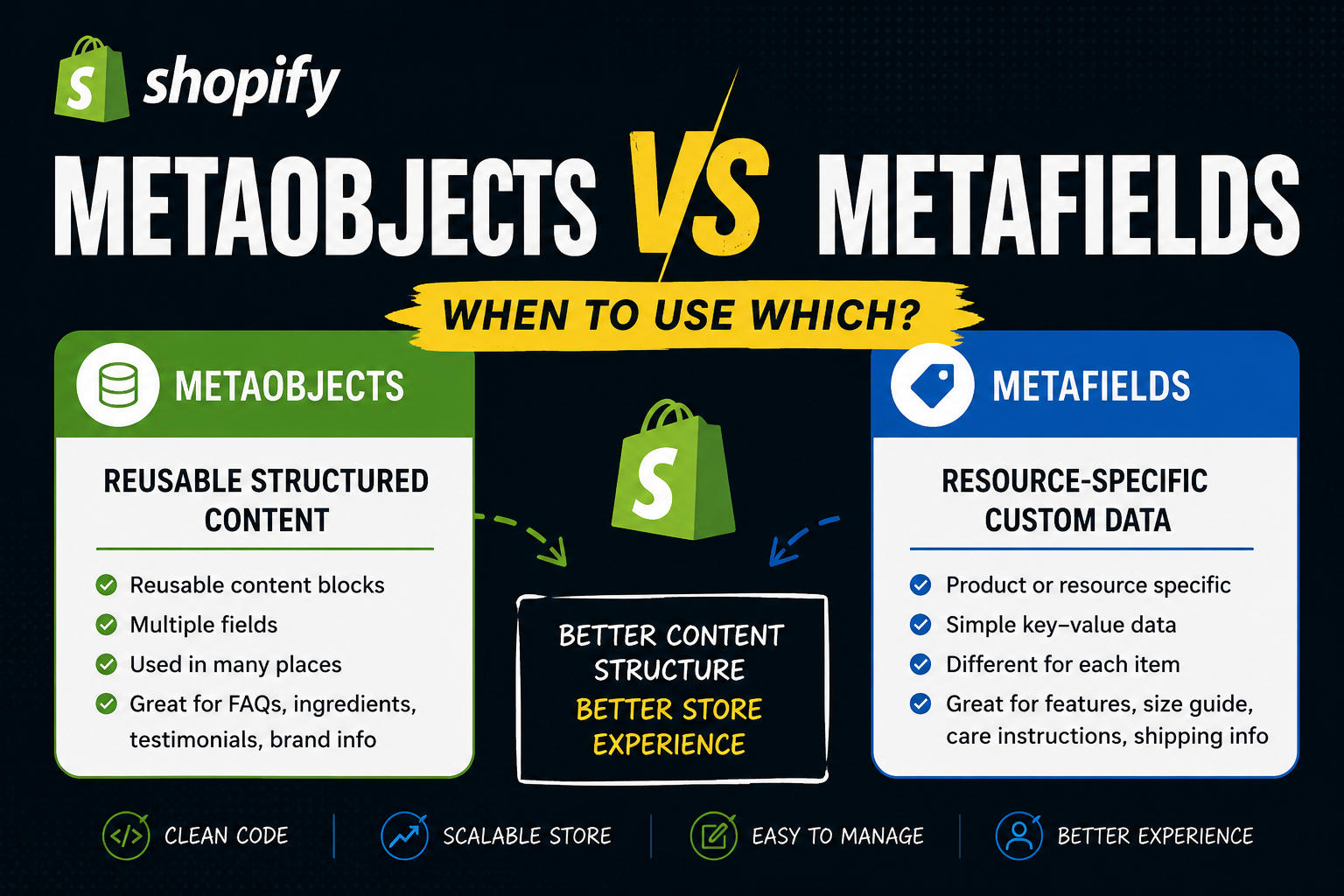
Shopify Metaobjects vs Metafields: When to Use Which
Shopify gives developers and store owners powerful tools to manage custom content. Two of the most useful tools are Metafields and Metaobjects.
Both are used for dynamic content, but they are not the same. If you understand when to use metafields and when to use metaobjects, you can build cleaner, more scalable, and easier-to-manage Shopify stores.
What Are Shopify Metafields?
Shopify Metafields are used to add extra custom information to a specific Shopify resource, such as a product, collection, customer, order, or page.
For product pages, metafields are very useful when each product needs its own unique content. For example, one product may have a different size guide, feature list, material details, care instructions, or shipping note.
- Product-specific features
- Size guide information
- Care instructions
- Shipping notes
- Product specifications
- Custom badges or labels
What Are Shopify Metaobjects?
Shopify Metaobjects are used to create reusable structured content. Instead of storing just one custom value, a metaobject can contain multiple fields inside one content structure.
For example, if a store needs reusable content blocks like brand stories, FAQ items, ingredient cards, testimonials, size guide blocks, or product highlight sections, metaobjects can be a better choice.
- Reusable FAQ sections
- Brand information blocks
- Ingredient or material cards
- Product highlight groups
- Testimonials
- Store location information
- Team member profiles
The Main Difference
The simple difference is this:
Metafields are best for custom data attached to a specific product or resource. Metaobjects are best for reusable structured content that can be used in multiple places.
If the content belongs directly to one product, use a metafield. If the content is a reusable content object with multiple fields, use a metaobject.
When I Use Metafields
I use metafields when the content is directly connected to a product or another Shopify resource.
For example, a product page may need unique feature points, a size guide, delivery note, or care instruction. These values are different for each product, so metafields are a clean solution.
- Each product has different information
- The data belongs to one product
- The content is simple and direct
- The store owner needs to edit it from Shopify admin
- The theme should show dynamic product-specific content
When I Use Metaobjects
I use metaobjects when the content needs a proper structure and may be reused across different pages or products.
For example, a skincare store may have ingredients that include a name, image, description, and benefit. Instead of hardcoding this information repeatedly, we can create an ingredient metaobject and reuse it where needed.
- The content has multiple fields
- The same content can be reused
- The structure needs to stay consistent
- The content is more like a custom database entry
- The store needs better long-term content management
Example Use Case
Imagine a Shopify product page that needs product features, FAQs, and ingredient details.
For simple product-specific information, I would use metafields:
custom.feature_1
custom.feature_2
custom.size_guide
custom.shipping_note
But for reusable ingredient cards, I would use metaobjects:
Ingredient Metaobject:
- Name
- Image
- Description
- Benefit
This keeps the Shopify theme cleaner and makes the content easier to update from the admin.
Why This Matters for Custom Shopify Development
A Shopify store should not depend on too much hardcoded content. Hardcoded content is difficult to update, hard to scale, and can create extra work for store owners.
Using metafields and metaobjects properly helps create a better content structure. The store becomes easier to manage, and the theme stays cleaner.
- Less hardcoded content
- Cleaner Shopify theme structure
- Better product page flexibility
- Easier content management
- More scalable store architecture
- Better workflow for developers and store owners
Metafields vs Metaobjects: Simple Rule
Here is the simple rule I follow:
- Use Metafields when the content belongs to one product, collection, page, or resource.
- Use Metaobjects when the content is reusable, structured, and may be used in multiple places.
Final Thoughts
Shopify Metafields and Metaobjects are both powerful tools for building dynamic Shopify stores. The key is knowing which one to use in the right situation.
Metafields are great for product-specific content. Metaobjects are great for reusable structured content. When both are used properly with clean custom coding, a Shopify store becomes more flexible, easier to manage, and better prepared for future growth.
For professional Shopify development, good content structure matters just as much as good design. A clean setup saves time, reduces repeated work, and creates a better experience for both store owners and customers.
Comments
0 replies- No comments yet. Be the first to share your thoughts.