5/19/2026 | 4 min read
How I Use Shopify Metafields for Dynamic Product Pages
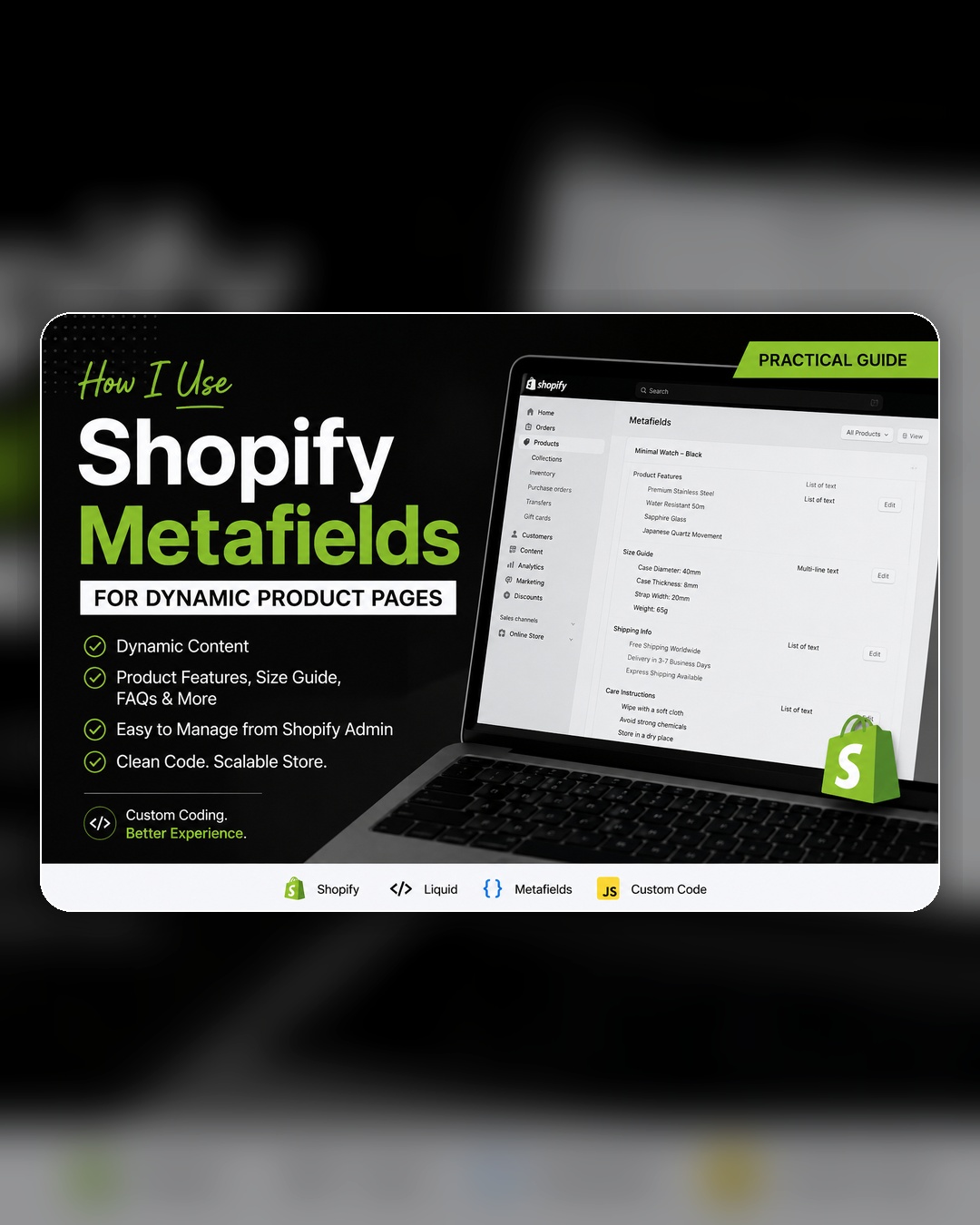
Shopify Metafields help manage product-specific content like features, size guides, FAQs, shipping details, and custom product information without editing theme code every time.
How I Use Shopify Metafields for Dynamic Product Pages
Shopify product pages often need more than just a title, price, description, and image gallery. Different products may need different features, size guides, care instructions, shipping notes, FAQs, technical details, or extra selling points.
If all of this content is hardcoded inside the theme, it becomes difficult to manage. Every small change may require editing theme code again. This is where Shopify Metafields become very useful.
What Are Shopify Metafields?
Shopify Metafields allow store owners and developers to add extra custom information to products, collections, customers, orders, and other Shopify resources.
For product pages, metafields are especially powerful because they help show product-specific content dynamically. Instead of writing the same code again and again, the theme can read metafield data and display the right content for each product.
Why I Use Metafields in Shopify Product Pages
When building custom Shopify product pages, I like using metafields because they keep the theme cleaner and make the store easier to manage from the Shopify admin.
- Less hardcoded content: Product details can be managed from the admin instead of editing code.
- Dynamic product information: Each product can show its own unique content.
- Better scalability: New products can follow the same structure without extra development work.
- Cleaner theme code: The layout stays reusable and more maintainable.
- Better client experience: Store owners can update content more easily.
Common Metafield Use Cases
Shopify Metafields can be used in many practical ways. For custom product pages, I usually use them to manage extra content that changes from product to product.
- Product feature points
- Size guide information
- Shipping and delivery notes
- Care instructions
- Material or ingredient details
- Product specifications
- FAQs and accordion content
- Trust-building information
- Custom badges or labels
Example: Dynamic Product Features
For example, one product may have different feature points than another product. Instead of hardcoding those points into the theme, we can create metafields for product features and display them dynamically on the product page.
Product metafields:
custom.feature_1
custom.feature_2
custom.feature_3
custom.size_guide
custom.shipping_note
This makes the product page flexible. The same product page design can work for many products, but the content will change based on each product’s metafield values.
Metafields for Product Accordions
Product accordions are one of the best places to use metafields. Instead of showing the same description, size guide, shipping info, or FAQ for every product, each product can have its own accordion content.
- Description
- Size Guide
- Shipping Info
- Care Instructions
- FAQs
This improves the user experience because customers can find product-specific information more clearly without reading unnecessary content.
Why Metafields Are Better Than Repeating Code
Without metafields, developers may need to create multiple templates or hardcode different content for different products. This can make the theme difficult to maintain.
With metafields, the same section or template can be reused, while the content stays dynamic. This keeps the website more professional and easier to update.
Good for Store Owners and Developers
Metafields are useful for both store owners and developers. Developers can build clean and reusable sections, while store owners can manage product-specific information from the Shopify admin.
This creates a better workflow because not every content update needs a developer. The theme stays structured, and the store owner gets more control over product content.
How Metafields Improve Product Page Quality
A well-structured product page helps customers understand the product faster. When important information is clear and easy to access, customers feel more confident before buying.
- Product information becomes clearer
- Customers can find details faster
- Product pages feel more professional
- Content management becomes easier
- The store becomes more scalable
Shopify Metafields help turn a basic product page into a dynamic, flexible, and easier-to-manage product experience.
Final Thoughts
Shopify Metafields are a smart way to manage dynamic product content. They help reduce hardcoded content, improve theme structure, and make product pages easier to scale.
For custom Shopify development, metafields are one of the most useful tools because they give flexibility without making the theme messy.
If you want a Shopify product page with dynamic features, custom accordions, size guides, FAQs, and product-specific content, using metafields with clean custom coding is a strong long-term solution.
Comments
0 replies- No comments yet. Be the first to share your thoughts.