5/30/2026 | 3 min read
How I Plan a Client Website Before Writing Code
Before writing code, I focus on understanding the client’s goals, website structure, user flow, responsive layout, SEO basics, performance, and future scalability. A strong plan makes development cleaner and the final website more effective.
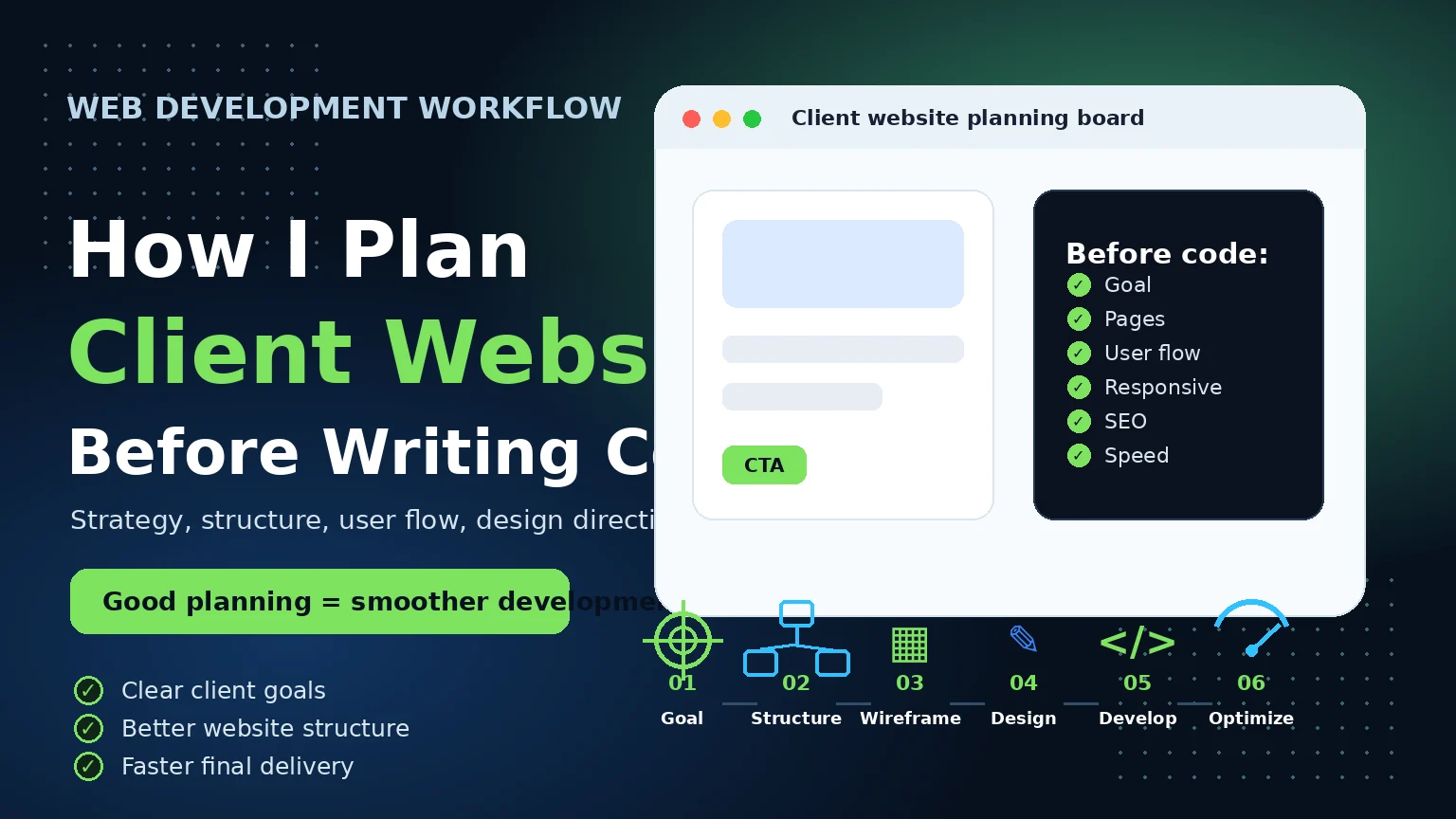
How I Plan a Client Website Before Writing Code
A successful website does not start with code. It starts with a clear plan. Before writing a single line of code, I try to understand the client’s goal, business type, target audience, content structure, and the main purpose of the website.
Good planning helps make the development process smoother, cleaner, and more effective. It also helps avoid confusion later in the project.
Understanding the Client’s Goal
The first thing I focus on is the client’s main goal. Every website has a purpose. Some websites are built to generate leads, some are built to sell products, some are used to showcase services, and some are created to build trust around a brand.
When the goal is clear, it becomes easier to plan the right layout, pages, content, and features.
Planning the Website Structure
After understanding the goal, I plan the website structure. This includes deciding which pages are needed and how users will move from one page to another.
- Home page
- About page
- Service or product pages
- Portfolio or case study section
- Contact page
- Blog or resource section
A clean structure makes the website easier to use and easier to maintain in the future.
Thinking About User Flow
A website should guide visitors naturally. I think about what a visitor will see first, what information they need next, and what action they should take after reading the content.
For example, a service-based website should clearly explain the service, show trust, display previous work, and make it easy for visitors to contact the business.
Mobile-First Responsive Planning
Most visitors browse websites from mobile devices. That is why I always think about mobile layout early in the planning stage.
A website should look clean, load fast, and feel easy to use on mobile, tablet, and desktop. Buttons, text, spacing, images, and navigation should all work smoothly across different screen sizes.
SEO and Performance Consideration
Before development, I also think about basic SEO and performance. A website should not only look good. It should also be structured properly so search engines and users can understand it.
- Clean page structure
- Proper heading hierarchy
- SEO-friendly page titles and descriptions
- Optimized images
- Fast loading sections
- Clean and maintainable code
Choosing the Right Development Approach
Every project does not need the same technology. Some projects are better with Shopify, some with WordPress, some with Wix, and some need a custom MERN or Next.js solution.
I choose the development approach based on the client’s business goal, budget, content needs, scalability, and future maintenance plan.
Why Planning Saves Time
Planning may feel like extra work, but it saves a lot of time during development. When the structure, content, and goal are clear, coding becomes faster and cleaner.
A good website plan reduces confusion, improves workflow, and helps create a better final result.
Final Thoughts
Before writing code, I believe it is important to understand the full picture of the project. A website should not be built randomly. It should be planned with purpose, structure, user experience, performance, and future growth in mind.
Good planning leads to better design, cleaner development, smoother user experience, and a more professional website.
Comments
0 replies- No comments yet. Be the first to share your thoughts.