8/12/2026 | 2 min read
How I Built an Automated ISP Billing & MikroTik Router Management System
How I Built an Automated ISP Billing & MikroTik Router Management System
How I Built an Automated ISP Billing & MikroTik Router Management System
Managing Internet Service Provider (ISP) operations manually is slow, error-prone, and financially inefficient. Between handling PPPoE subscriber credentials, managing bandwidth queues, and tracking monthly payments, small to mid-sized ISPs face massive administrative overhead.
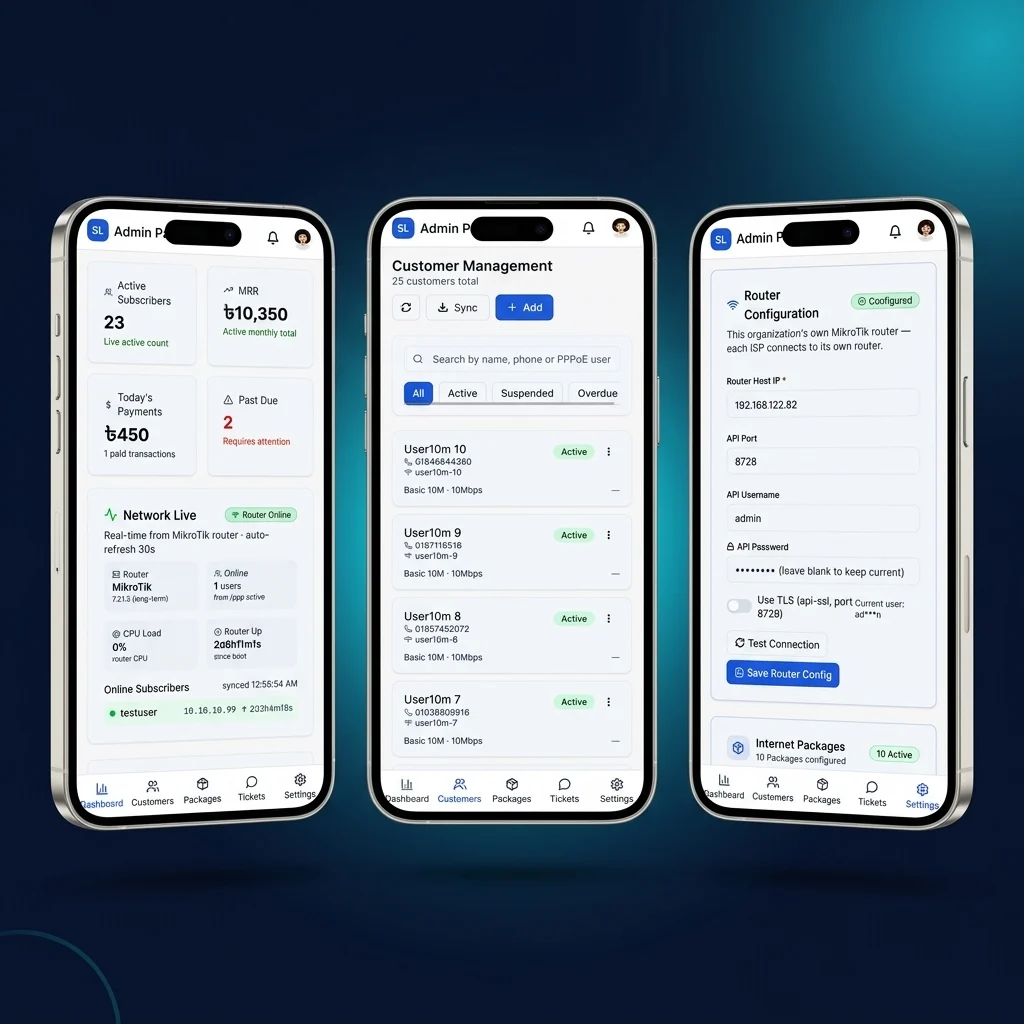
To solve this problem, I engineered a full-stack ISP automation platform that directly connects web software with live MikroTik networking hardware.
The Core Challenges
- Manual Service Disconnects: When customers miss payment deadlines, manually disabling users in WinBox takes time and leads to revenue leaks.
- Desynchronized Router State: Database subscriber status often desynchronizes from real router active sessions.
- Telemetry & Analytics: Lack of centralized visibility into router CPU load, active connections, and real-time revenue stats.
Key Architectural Highlights
1. Real-Time MikroTik Integration
Using node-routeros, the backend API server establishes direct socket connections with MikroTik routers (port 8728). This allows programmatically managing PPPoE secrets, active users, and updating bandwidth rate-limits dynamically without manual router login.
2. Automated Lifecycle & Cron Jobs
Implemented robust background schedulers using node-cron to execute automated operational workflows:
- Automated monthly invoice generation for all active subscribers.
- Instant auto-disconnect for overdue accounts upon grace period expiration.
- Instant auto-reconnect upon payment confirmation.
3. Real-Time Telemetry Dashboard
Developed with Next.js 14, TypeScript, Tailwind CSS, Radix UI, and Recharts. The dashboard provides real-time telemetry into router CPU health, online user counts, dynamic bandwidth monitoring, and monthly collection metrics.
Tech Stack Overview
- Backend: Node.js, Express, TypeScript, Prisma ORM, RouterOS API, Node-Cron
- Frontend: Next.js 14, React, Tailwind CSS, Radix UI, Recharts
- Database & Auth: PostgreSQL / MySQL, JWT Authentication, Role-Based Access Control
Conclusion
Building this platform bridges the gap between modern full-stack web software and real-world networking infrastructure. It eliminates manual ISP administrative work, secures revenue collection, and delivers real-time router control.
Comments
0 replies- No comments yet. Be the first to share your thoughts.